The short answer
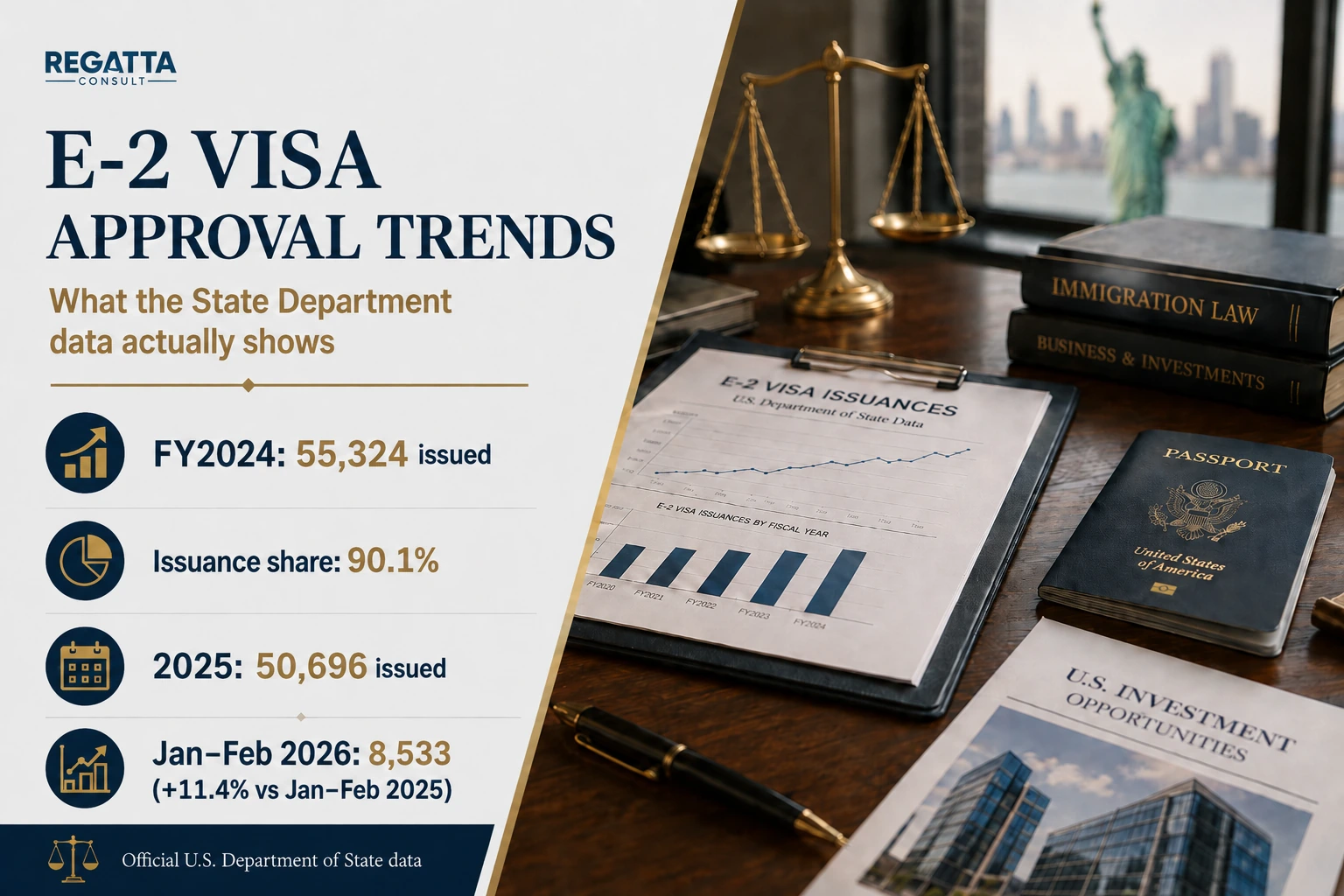
The E-2 treaty investor visa has one of the highest approval shares of any U.S. work-authorizing visa. In fiscal year 2024, U.S. consulates issued 55,324 E-2 visas out of 61,432 applications adjudicated — an issuance share of just over 90% (U.S. Department of State, Nonimmigrant Visa Statistics).
Demand has stayed at record levels since: in calendar year 2025 consulates issued 50,696 E-2 visas, and 2026 started even stronger — 8,533 E-2 visas in January–February 2026, about 11% more than in the same two months of 2025.
What the official numbers show
Complete fiscal-year statistics (the only series that also publishes refusals):
| Fiscal year | E-2 visas issued | Note |
|---|---|---|
| FY2020 | 23,493 | Consular operations largely shut down during the pandemic |
| FY2023 | 54,812 | Record year at the time |
| FY2024 | 55,324 | 6,108 refusals; 90.1% issued share |
The latest monthly data (calendar 2025 and early 2026):
| Period | E-2 visas issued | Note |
|---|---|---|
| Calendar year 2025 | 50,696 | Average of about 4,200 per month; 120 nationalities |
| January 2026 | 4,140 | |
| February 2026 | 4,393 | |
| January–February 2026 | 8,533 | vs 7,658 in January–February 2025 (+11.4%) |
Where the demand comes from — top nationalities in calendar 2025: Japan (15,668), Canada (6,642), South Korea (5,583), France (3,432) and Germany (3,301).
Source: U.S. Department of State, Monthly Nonimmigrant Visa Issuance Statistics, “NIV Issuances by Nationality and Visa Class”, January 2025 – February 2026. Monthly counts are visas issued at consulates and include company employees and dependents (spouses and children also receive E-2 visas); USCIS in-country changes of status are not included. The approval share can only be calculated for complete fiscal years, because refusal counts are published annually.
What a “90% approval rate” does NOT mean
- Cases that never got filed are not counted. Applicants whose business, investment amount or source-of-funds documentation is not ready are usually advised to fix the problems before applying.
- The statistic mixes strong and weak cases. The refused share is not random: refusals cluster around thin business plans, marginal enterprises and poorly documented funds.
- Practice varies from consulate to consulate.
In short: the high rate is good news about the visa category, not a promise about any individual case.
Why E-2 cases get refused
- Investment not “substantial” or not at risk — funds sitting in an account rather than committed to the business.
- Marginal enterprise — the business plan shows income only for the investor’s family, with no growth or hiring.
- Source of funds not documented — the money’s path to the U.S. business is not traceable on paper.
- Nationality/ownership issues — the qualifying treaty nationality does not own at least 50% of the business.
- Weak ties / intent questions at the interview.
Each of these is addressable in preparation — which is exactly why the adjudicated pool shows a 90%+ issuance share.
How RegattaLex approaches E-2 cases
Flat, published fees; the case is prepared directly by a California-licensed attorney. Start with the E-2 eligibility check or read the full E-2 visa guide.
Download the full data
Full data for all 120 nationalities, month by month, with 2025 totals and January–February 2026 — compiled from the U.S. Department of State monthly issuance statistics.
Download the Excel table (XLSX)
This article is for general information only and is not legal advice.