One of the questions we frequently receive from prospective E-2 investors is whether investment funds obtained through a loan can be used to qualify for an E-2 Treaty Investor visa.
The short answer
Yes — investment funds obtained through a loan can qualify for an E-2 treaty investor visa. However, as is often the case in immigration law, the details matter.
The official rule
The Foreign Affairs Manual draws the line by asking a single question: whose assets are actually at risk? (9 FAM 402.9-6(B))
- Counts toward the investment: “only indebtedness collateralized by the applicant’s own personal assets, such as a second mortgage on a home or unsecured loan, such as a loan on the applicant’s personal signature” — because the applicant risks those funds if the business fails.
- Does not count: “indebtedness such as mortgage debt or commercial loans secured by the assets of the enterprise” — there is no requisite element of risk. If the business itself is the collateral, the loaned funds are not at risk even if some personal assets are also pledged.
A real case: the partner loan that raised questions
A recent federal court decision highlights an issue many investors overlook. A consular officer noted that the applicant’s investment consisted of funds borrowed from his U.S. business partner and was not satisfied that the arrangement was a bona fide arm’s-length transaction. The officer questioned whether the investor was truly personally indebted — and whether his own funds were genuinely at risk.
The lesson: the focus is not only on the amount invested, but on the nature and structure of the investment. Loans from business partners, co-investors or affiliated parties draw closer scrutiny precisely because they can create the appearance of an investment without real personal risk.
The three qualities of qualifying funds
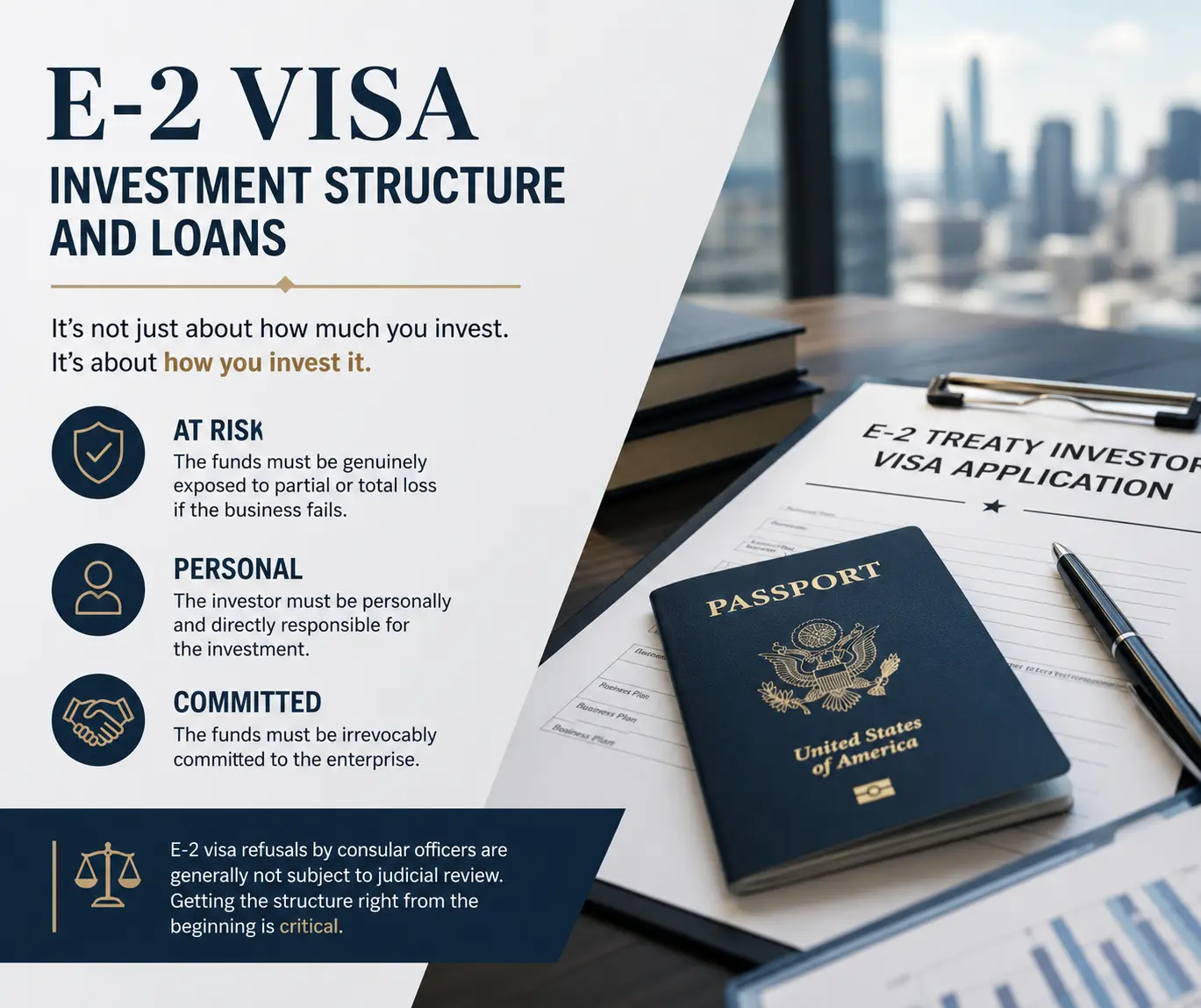
- At risk — the investor faces partial or complete loss if the business fails;
- Personally attributable — the investor bears personal responsibility for the funds;
- Irrevocably committed — the funds are committed to the enterprise; under the FAM, even a purchase conditioned on visa issuance can qualify if the funds are held in escrow.
Practical checklist before filing
- Document the source of every invested dollar — the officer may request whatever documentation is needed;
- Make any loan a genuine arm’s-length transaction: written agreement, market terms, repayment schedule;
- Be ready to show personal liability for the debt;
Why fixing it early matters
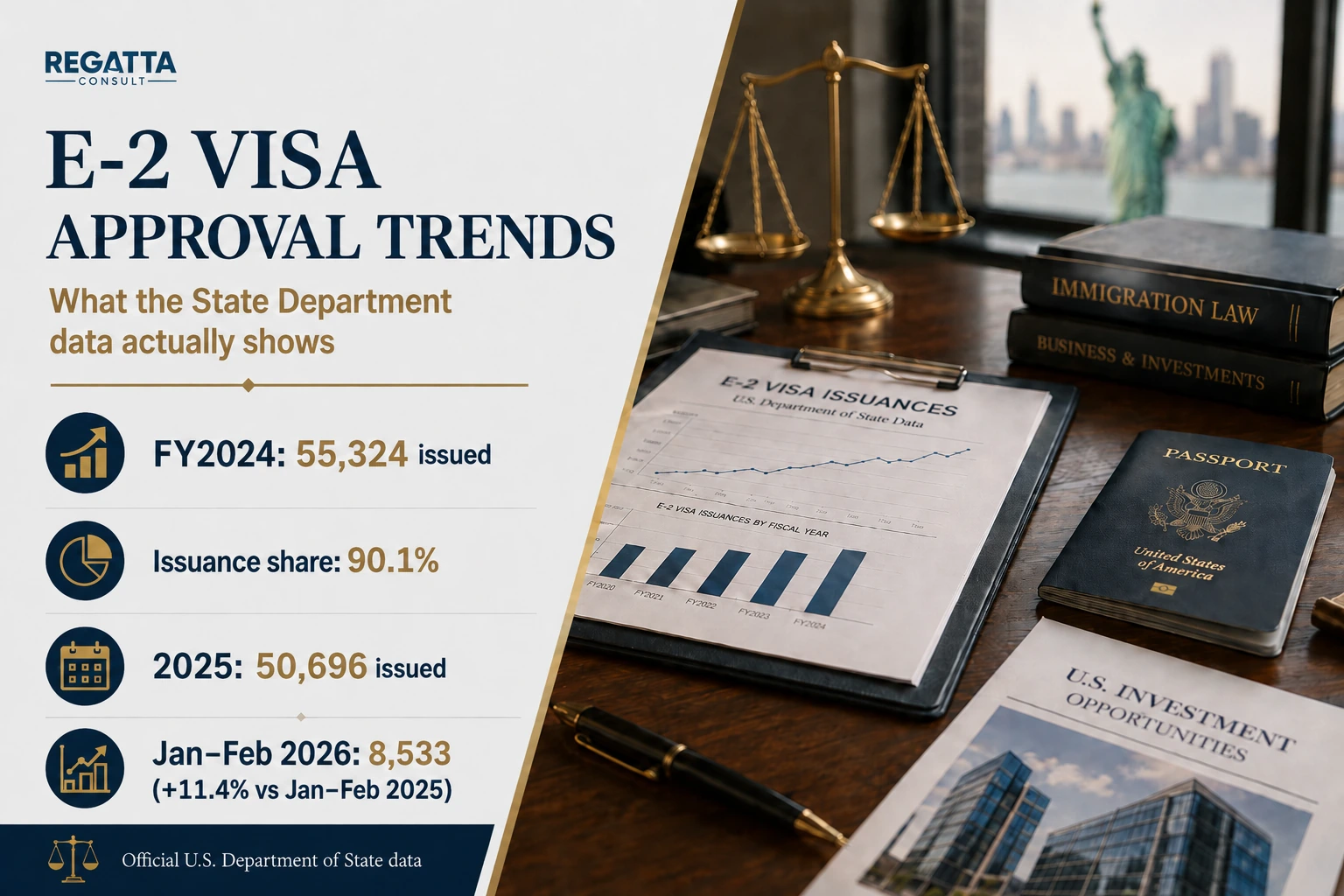
Consular refusals are generally not subject to judicial review. That makes the preparation stage the only stage you fully control — identifying and addressing structure problems early is often the difference between issuance and refusal. See also: how E-2 investment structure is assessed and what the E-2 approval statistics actually show.
How RegattaLex can help
A free introductory call with a California-licensed attorney to review your funding structure before any filings. Flat, published fees. Start with the E-2 eligibility check.
This article is for general information only and is not legal advice.