
Blog
Insights on U.S. immigration law, corporate law, E-2 and O-1 visa guidance, and legal updates from our team.

New Public Charge Guidance: What O-1 and E-2 Applicants Should Know
USCIS will apply broader public charge guidance to many Form I-485 filings submitted on or after September 18, 2026. O-1 and E-2 holders considering adjustment of status should review their financial evidence and benefits history before filing.

E-2 Visa Planning for a 2027-2028 US Move: Why Entrepreneurs Should Start Early
Entrepreneurs targeting a US move in 2027 or 2028 should begin E-2 planning well in advance. Business formation, investment documentation, consular preparation, and family logistics can create a long runway.

Proposed 60-Day Grace Period Elimination: What O-1 and E-2 Visa Holders Should Know
DHS is advancing a proposal that could eliminate the discretionary grace period available to certain nonimmigrants after employment ends. O-1 and E-2 visa holders should understand that no change is yet in effect but begin contingency planning now.
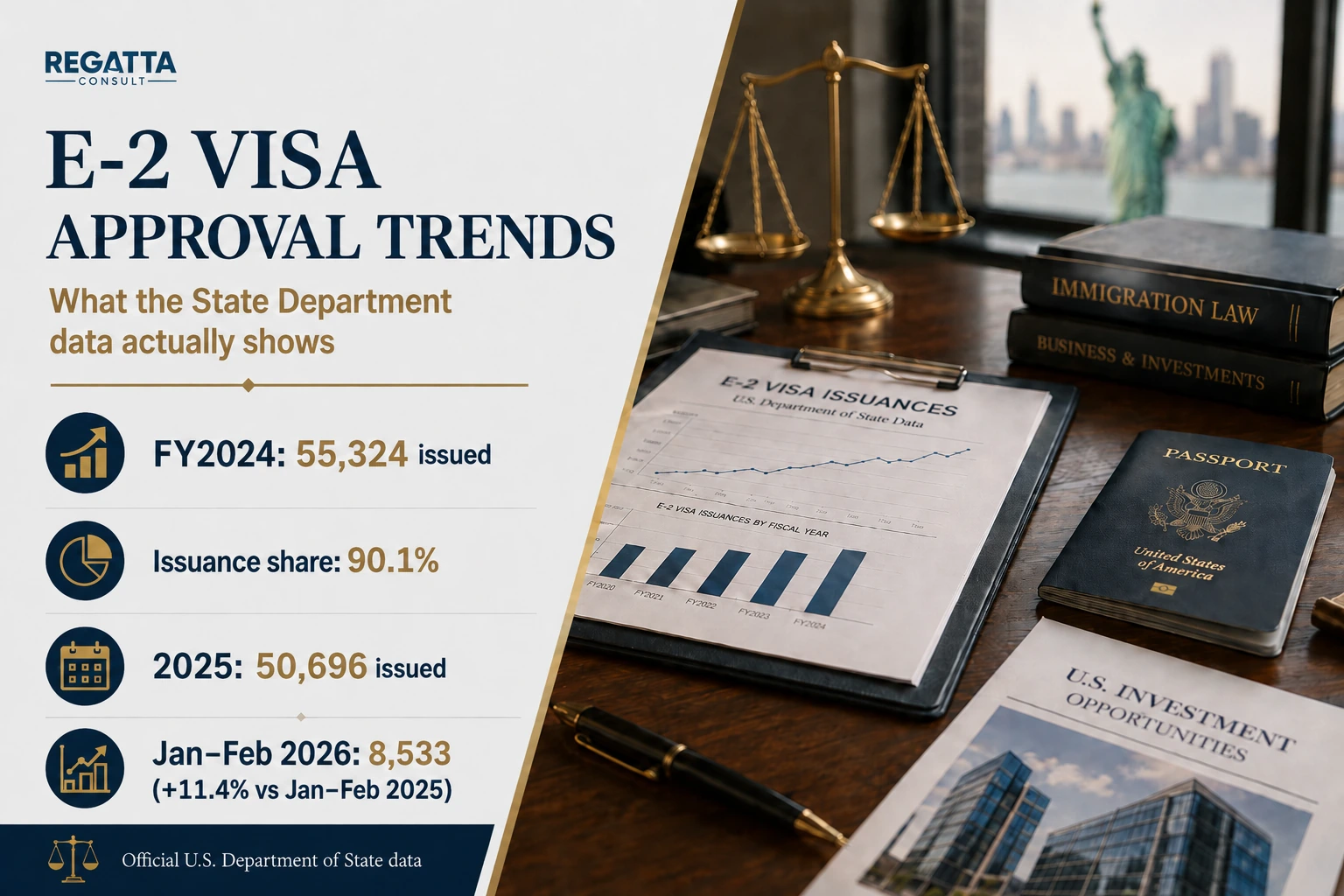
Recent trends in E-2 Visa: What the State Department Data Actually Shows
Official State Department data on E-2 visa approvals: 90%+ issuance share in FY2024, 50,696 E-2 visas issued in 2025 and a stronger start to 2026 — plus what the numbers really mean for applicants. Full country-by-country Excel table included.

New Edition of Form I-485
USCIS will introduce a revised Form I-485 on September 18, 2026, with no grace period for the prior edition. O-1 and E-2 applicants pursuing adjustment of status should carefully coordinate form preparation and filing dates.

New USCIS E-Filing Rule: What O-1 and E-2 Visa Applicants Should Know
Effective August 11, 2026, a new DHS rule allows USCIS to require online submission of eligible forms after advance notice. O-1 and E-2 applicants should prepare for account-based filing, electronic evidence, and online fee payments.

When Immigration Fraud Leads to Denial: the Fake-Attorney Trap and Why the Clock Keeps Running
A pending federal court case highlights an important lesson for E-2 visa applicants: even when you are the victim of immigration fraud, delays after discovering the fraud can jeopardize your case. Learn why verifying your attorney's credentials and acting promptly are essential.
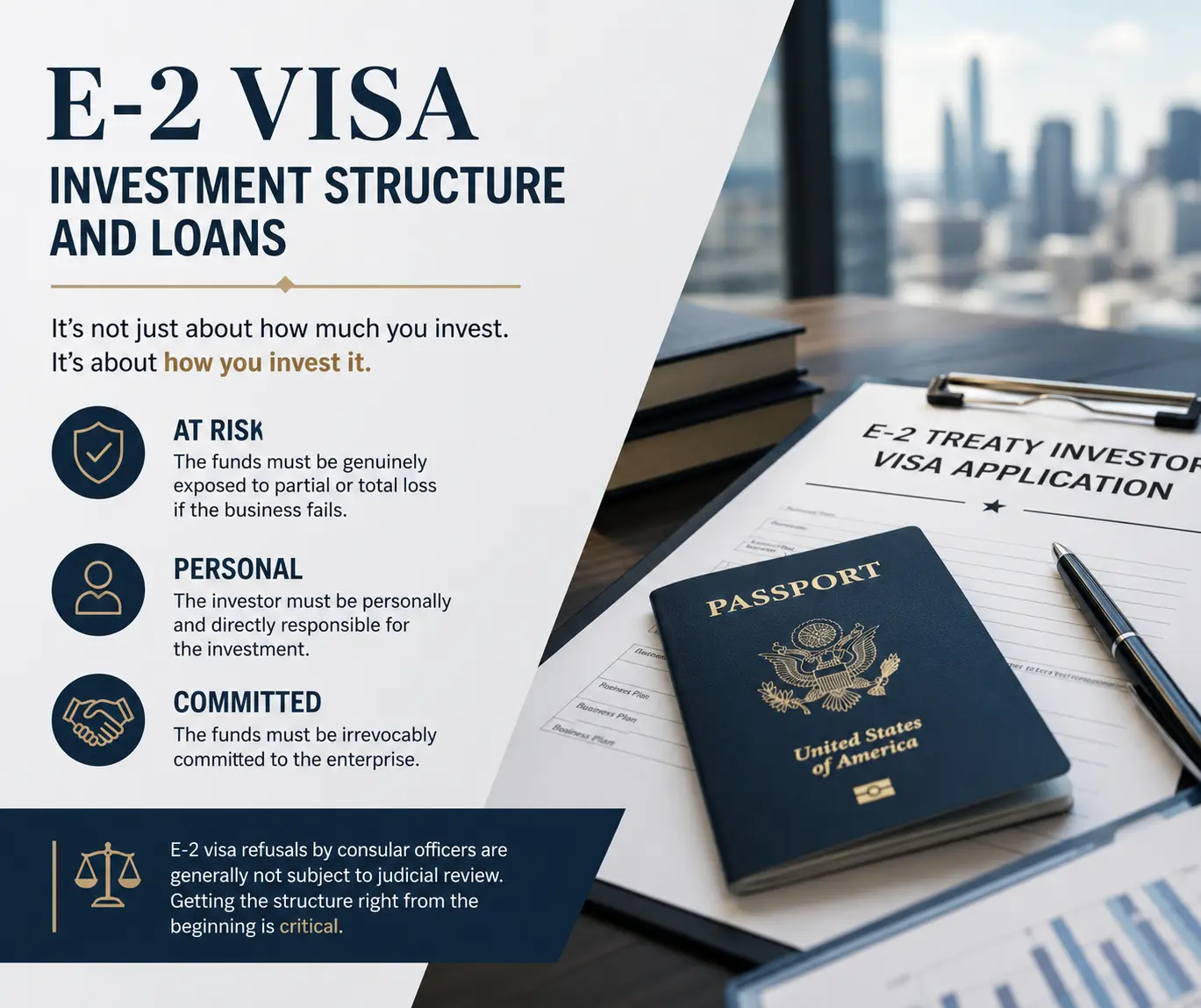
E-2 Visa and Borrowed Funds: When a Loan Counts as Investment and When It Kills the Case
Can E-2 investment funds come from a loan? In many cases, yes—but the structure matters. This article discusses how U.S. consular officers evaluate borrowed funds in E-2 visa applications, why personal financial risk is a key requirement, and how improperly structured loans can lead to visa refusals. Learn the factors that make loan-funded investments more likely to satisfy E-2 requirements and the common pitfalls investors should avoid.
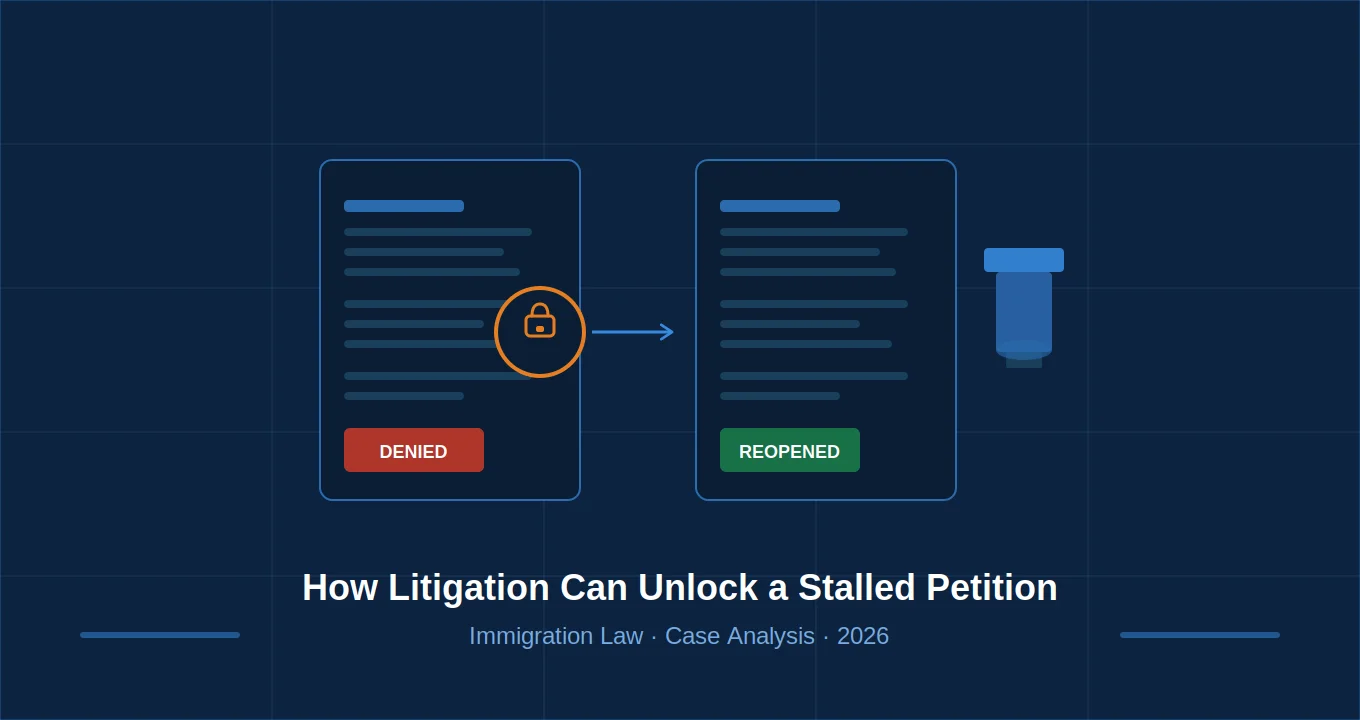
When Federal Court Becomes the Path to Agency Action
A recent federal court order offers a clear roadmap for practitioners dealing with adjudicative holds tied to presidential proclamations — and a reminder that dual nationality can be the key to unlocking a stalled petition.